Why Mobile-First Design is Essential for Survey Research (Even for Panel-to-Web Surveys)
By Kevin Collins
If your respondents are taking a survey online, it is highly likely that the interface they are using is a phone. This is not the case just for text-to-web surveys, or mail-to-web surveys in which respondents are encouraged to scan a QR code, but for panel-to-web surveys as well.
Consider the Cooperative Election Survey, a major (now annual) political science survey that has been fielded on YouGov since 2006. The proportion of respondents answering on cell phones has steadily risen since the survey started asking this question in 2012, with 56.5% of respondents indicating that they answered on a cell phone in 2024 (the most recent year available).
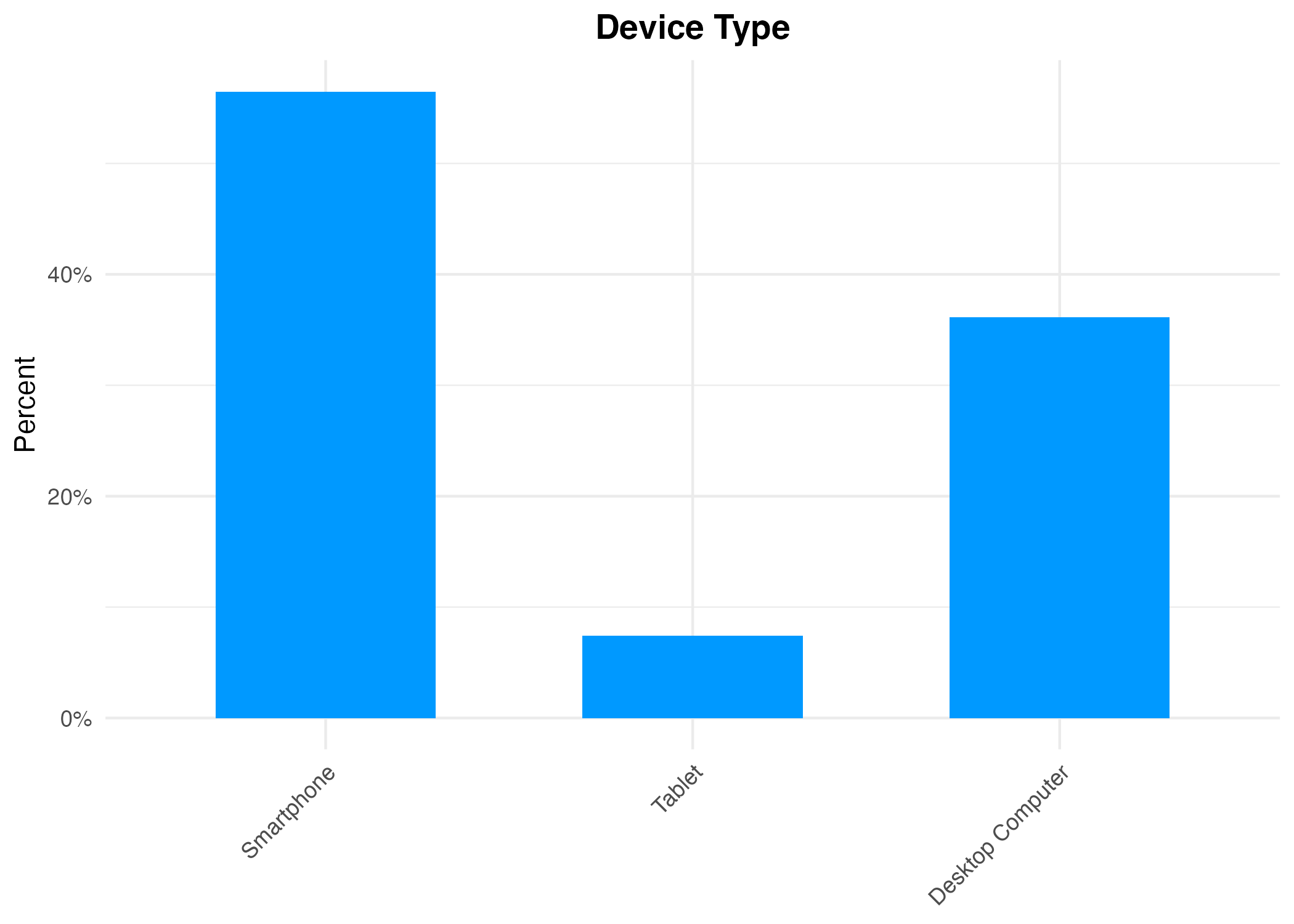
But it’s not just YouGov. Since 2024, Survey 160 has fielded a series of internally-funded surveys for methodological research with samples from online panel marketplaces in parallel to text-to-web surveys. We asked a similar device question in our November 2025 survey, and found that 78% of online panel respondents reported answering on either an iOS or Android device (including tablets).
What’s more, there are systematic differences in what types of respondents answer by each device type, such that it matters to make your surveys designed for mobile devices.
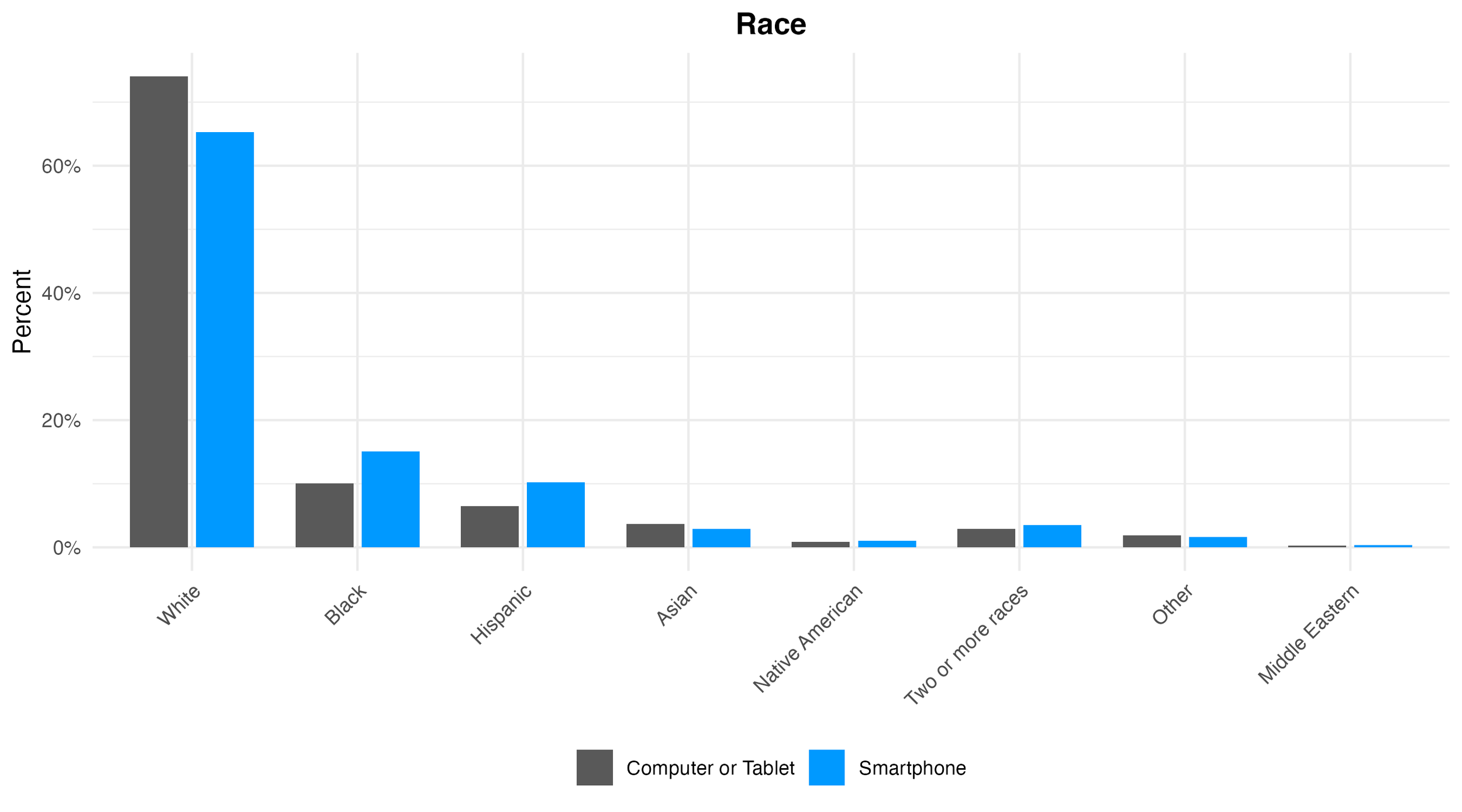
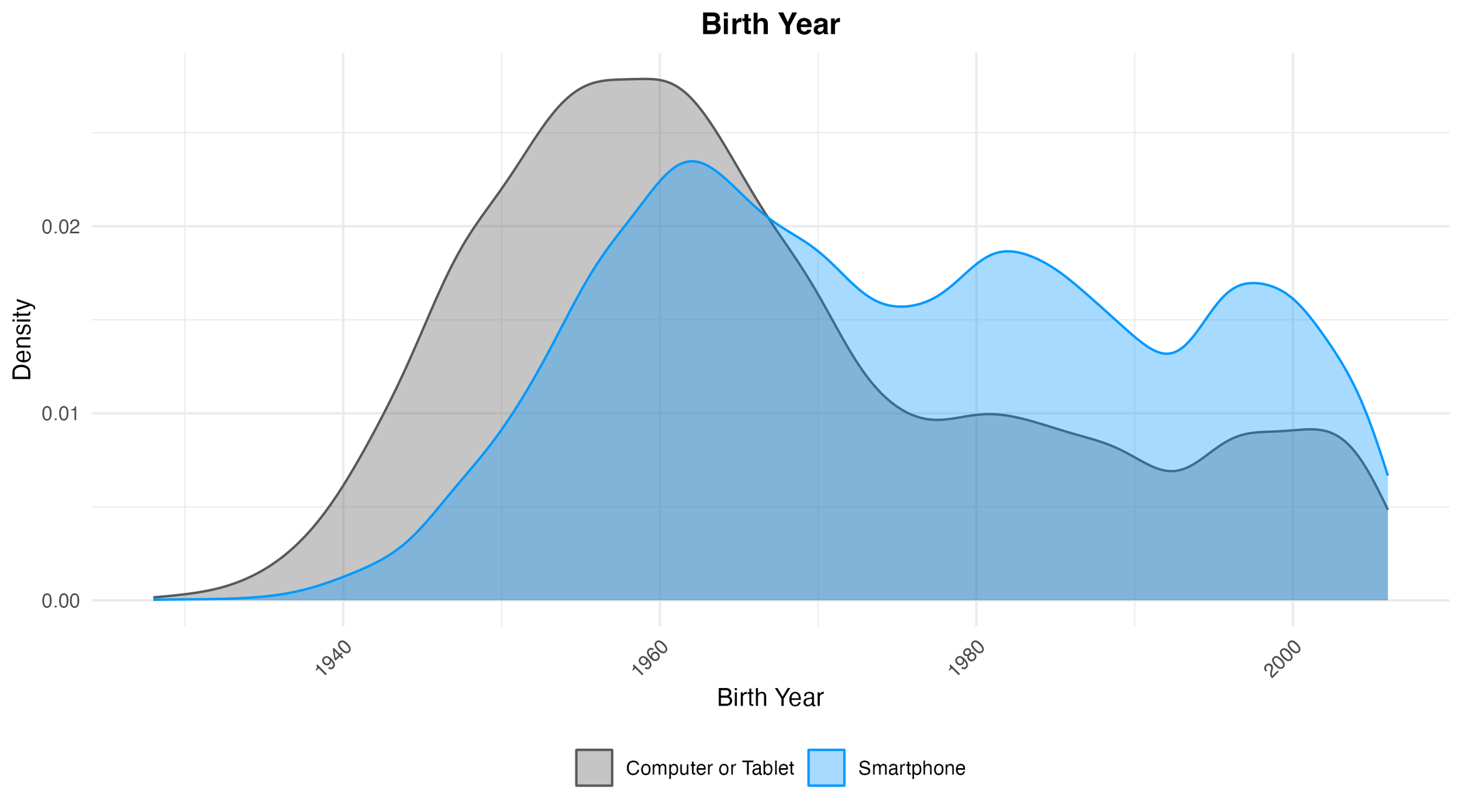
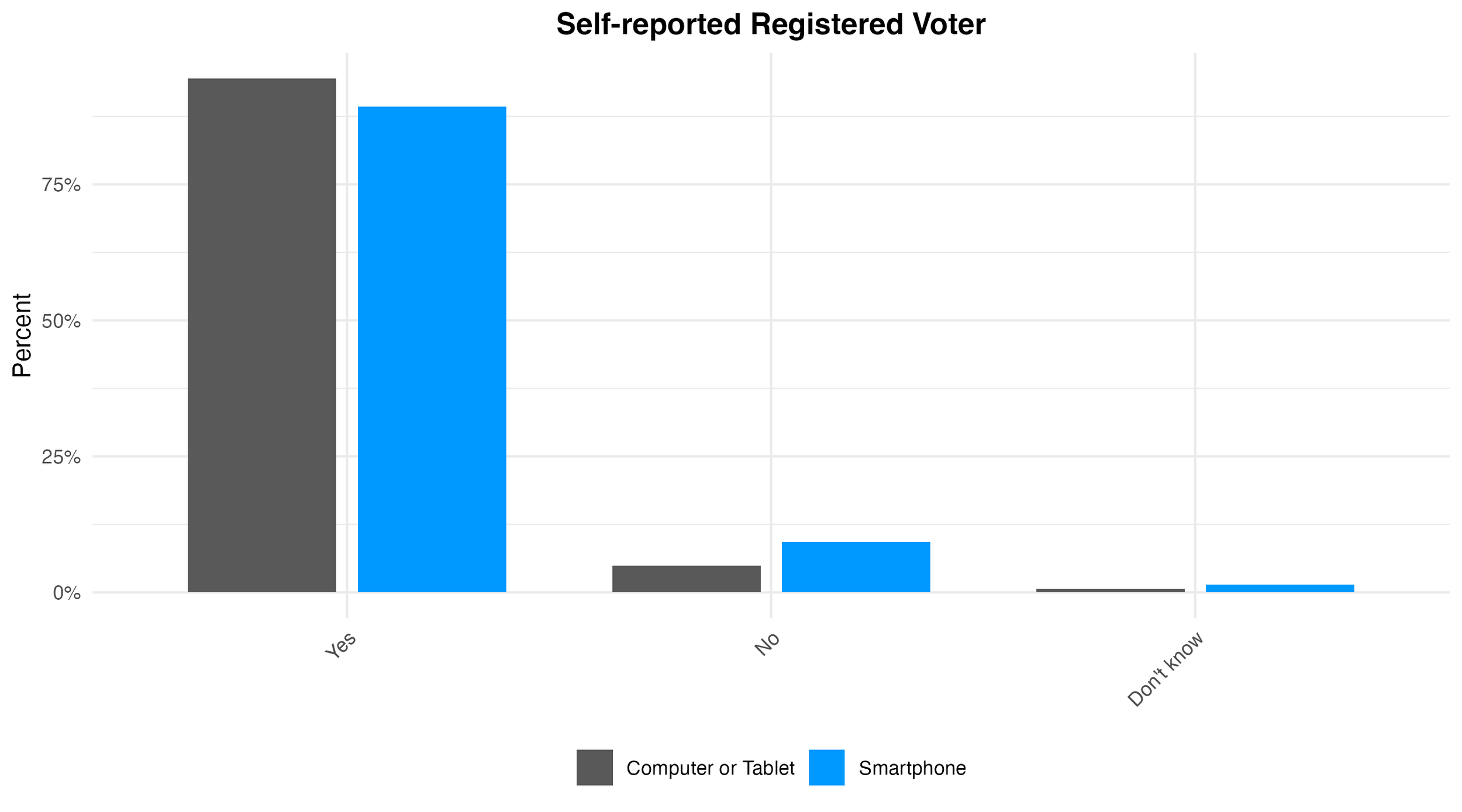
Looking just at the the CES data, compared to respondents answering on computers or other devices like tablets, those responding on smart phones are:
Less likely to be white and more likely to be Black or Hispanic
Younger on average
Less likely to be registered to vote
Less likely to report having voted
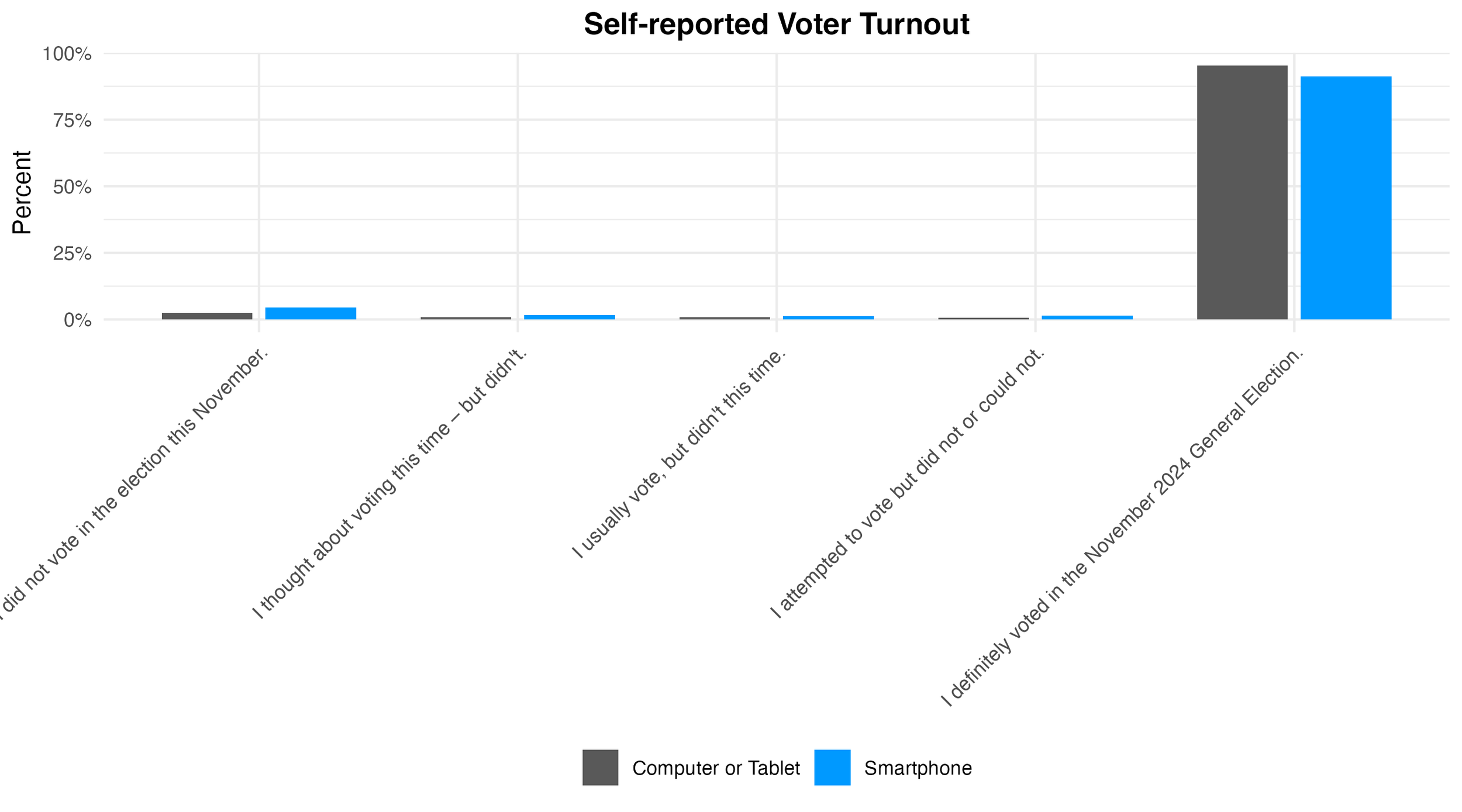
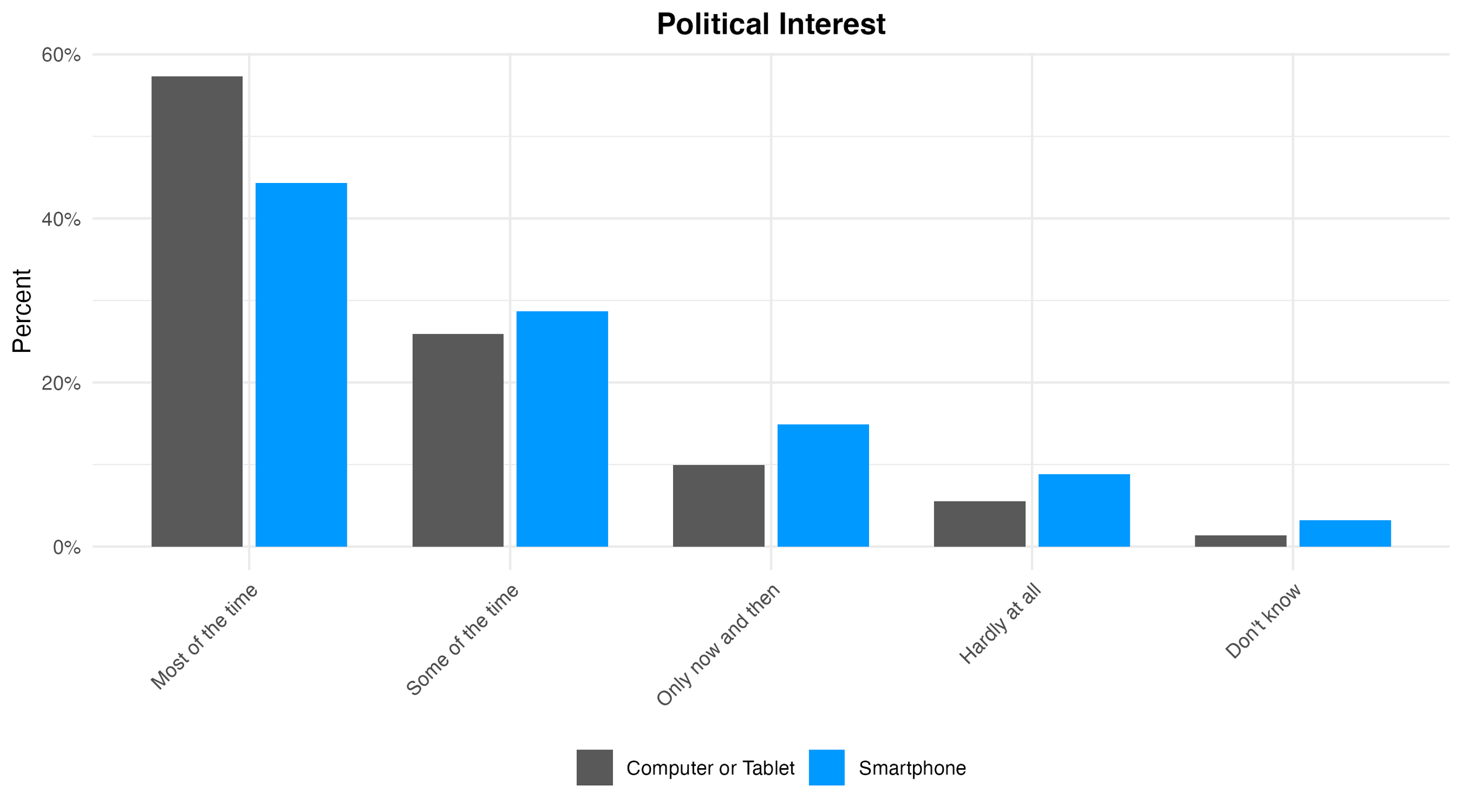
Less likely to say they follow the news most of the time
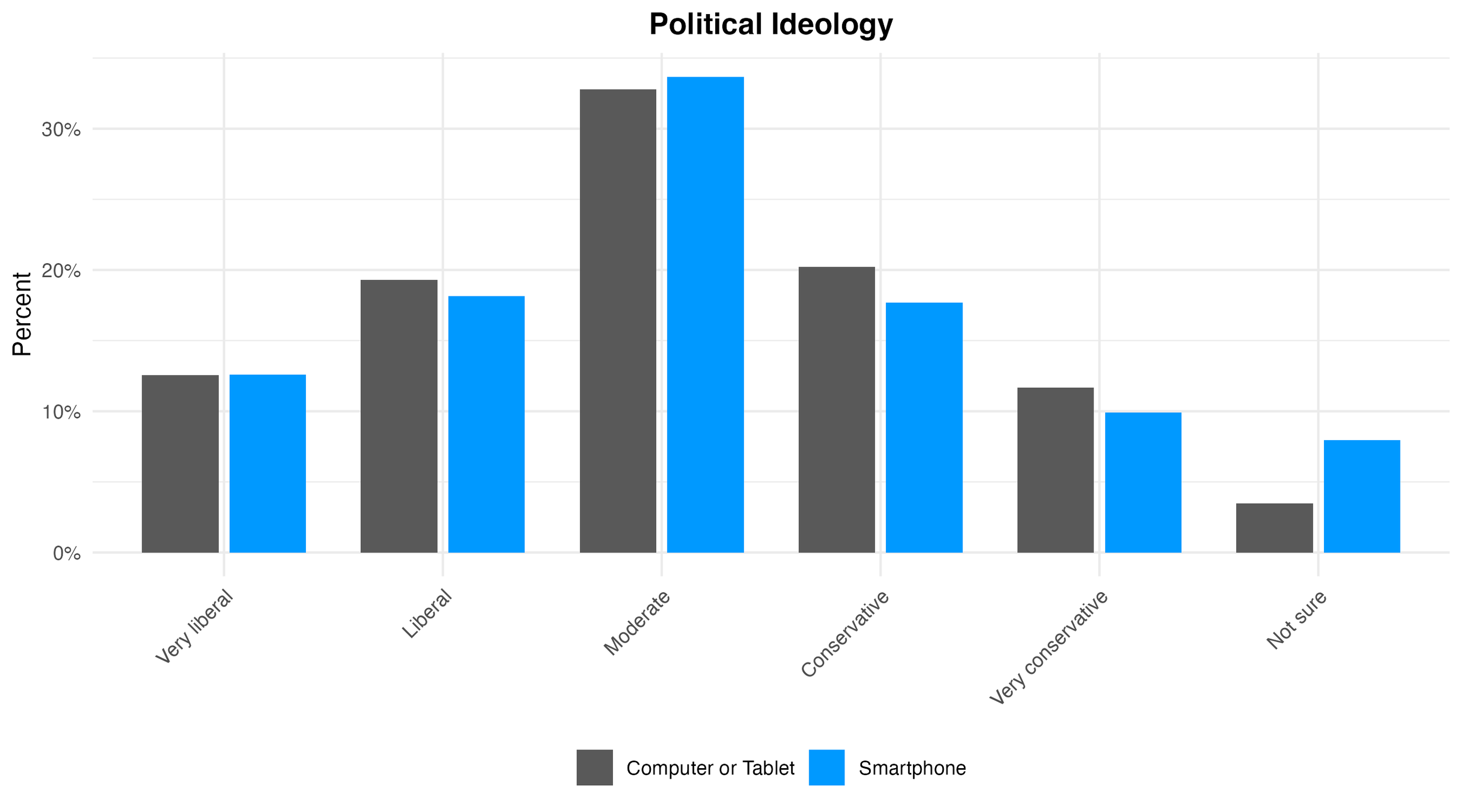
Less likely to rate self as Conservative or Very Conservative, but more likely not to be able to place self on an ideological scale
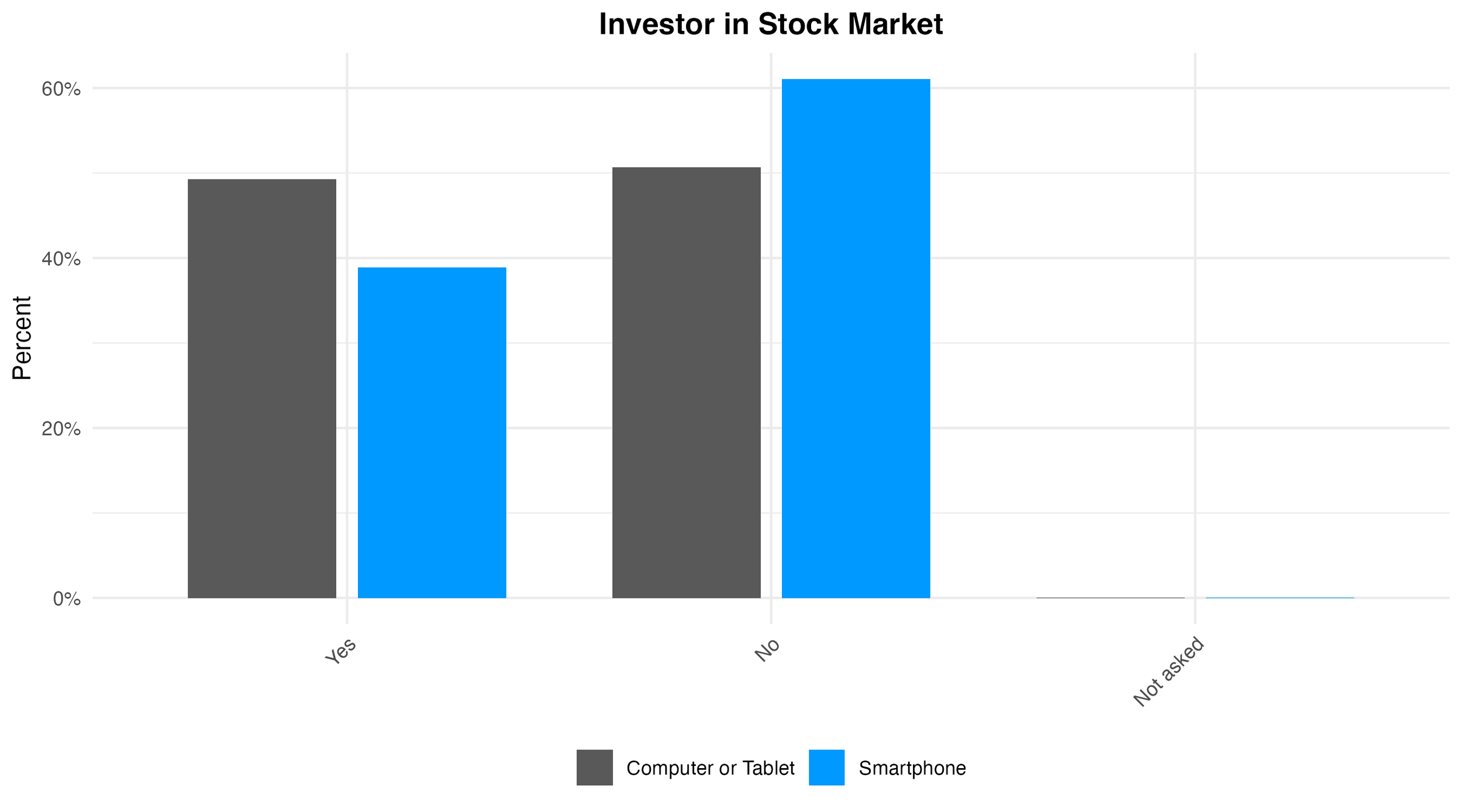
Less likely to own stock
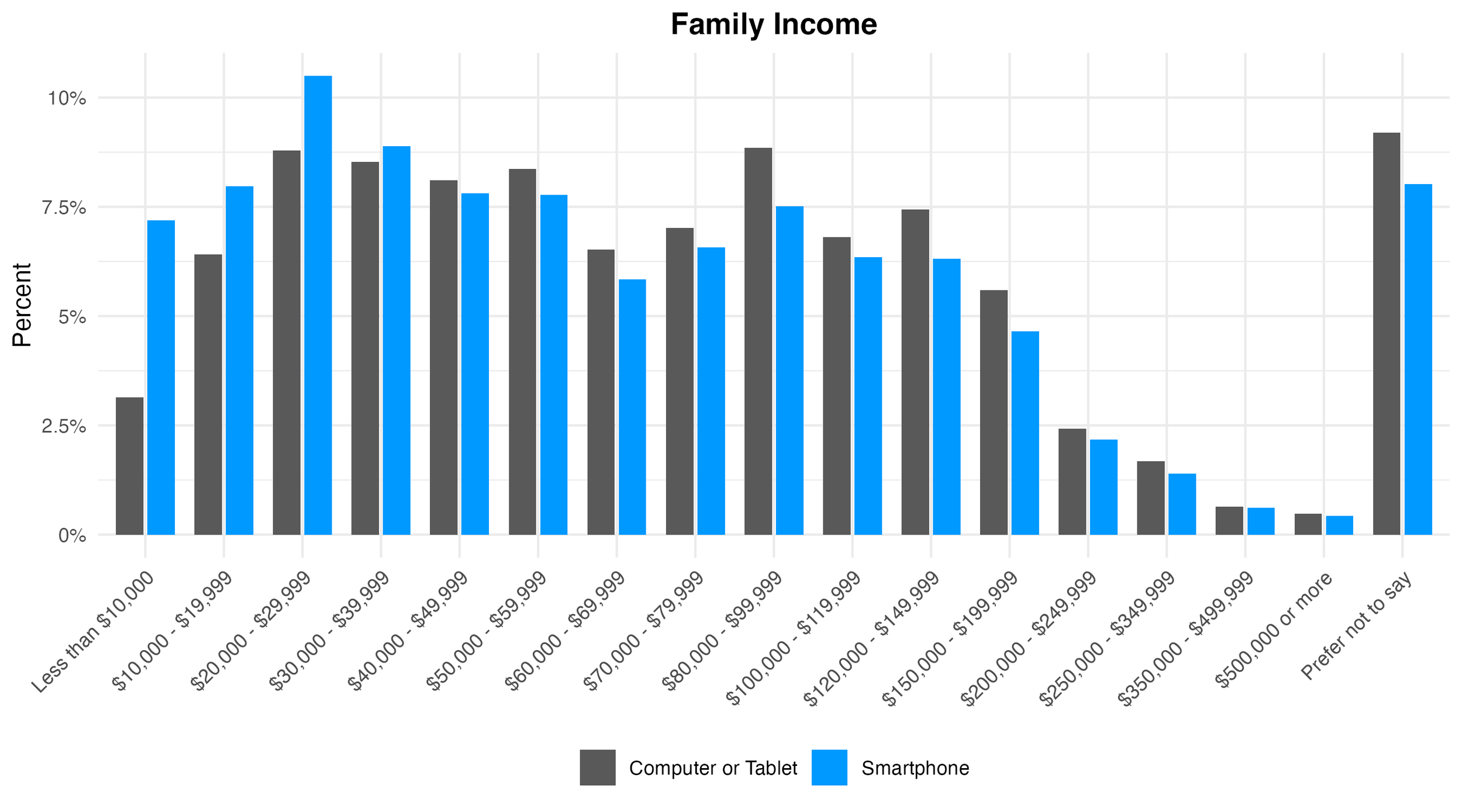
More likely to report family income < $40,000
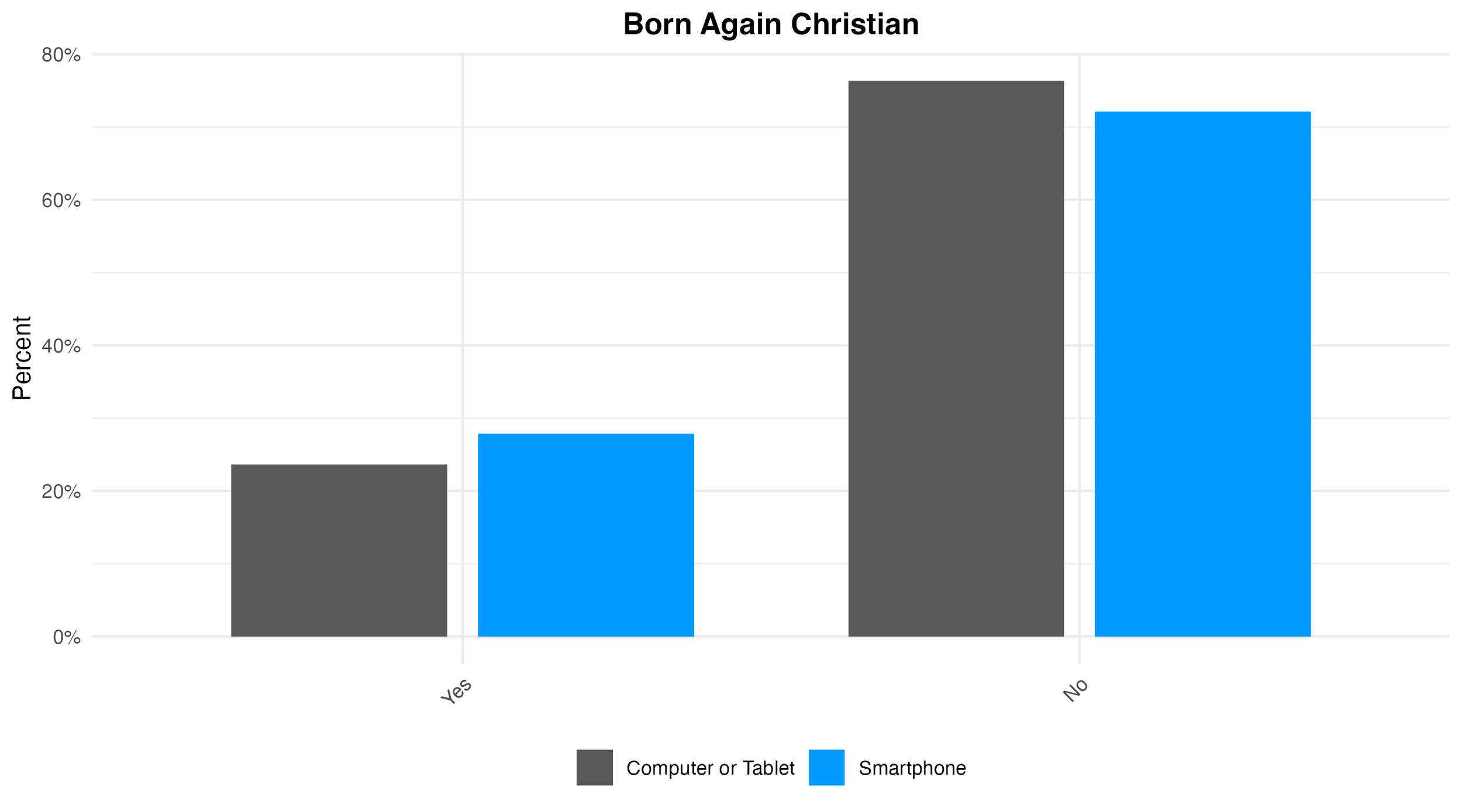
More likely to be born again
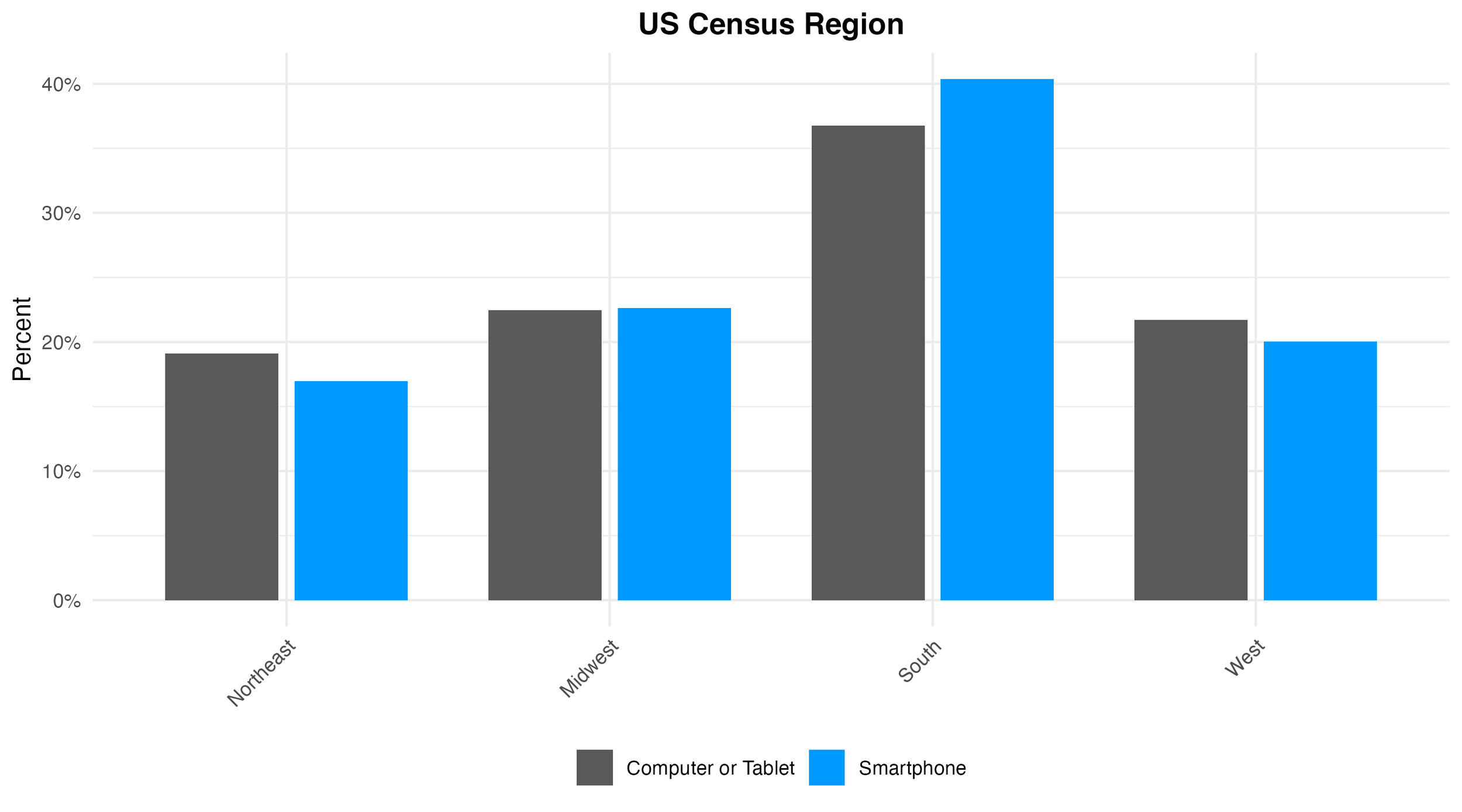
More likely to be from the South (using Census region designations)
A majority of panel respondents answer on phones, and they make up a distinctive portion of the electorate. Yet the user experience on a 3x5 inch screen is inherently different from that on a laptop or desktop computer, and so it is important to make sure that the survey is designed for the interface that most – and the most hard to reach – respondents are using.
We conclude with three recommendations. First, researchers should adopt a mobile-first approach to survey design, by which we mean building the user experience around the smartphone screen and then making sure that it also works on desktops, rather than the reverse. Second, researchers should test their web surveys on phones before fielding to ensure a seamless and frictionless user experience. In particular, researchers should be wary of long text blocks, grids, and scrolling elements, and be conscious of how these survey elements present when screen text size is scaled up for some elderly or visually impaired users. And third, researchers should ask about, and track, device type with respondent questions to look for differential patterns in data quality by device type.